What is an antiscalant? Grade selection, dosing and when to clean an RO membrane
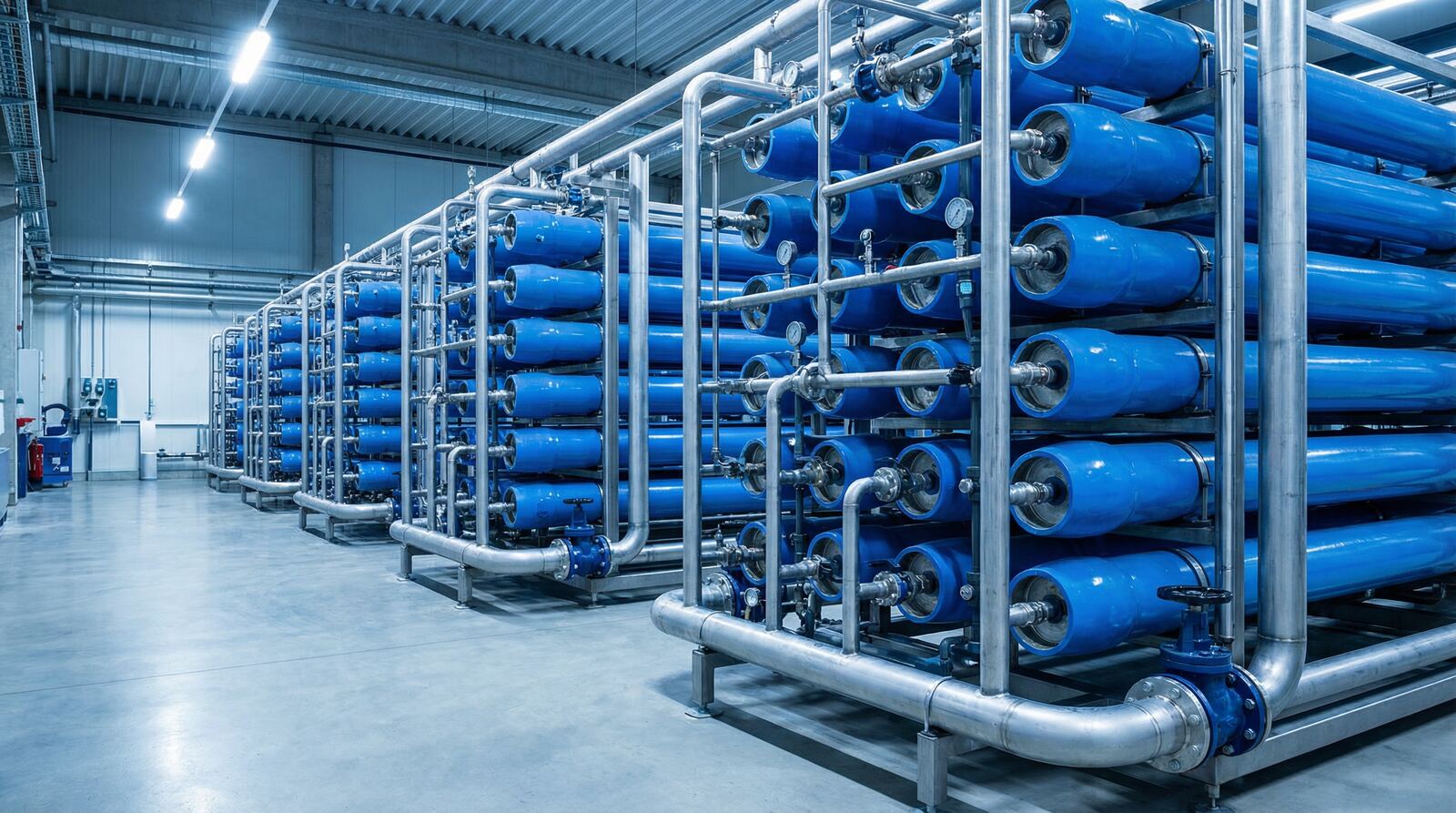
Comprehensive guide to antiscalants for reducing scale in industrial water systems, membranes, and cooling towers.
Scaling: The Hidden Enemy of Water Systems
Scaling is one of the most serious problems in industrial water systems. When water containing calcium, magnesium, silica, and other mineral ions passes over hot surfaces or is subjected to pressure, these substances come out of solution and deposit on surfaces. Scale deposits reduce heat transfer efficiency, increase energy consumption, clog pipes, and damage expensive equipment such as reverse osmosis (RO) membranes. Kimia Ceram Zarin's Kimiguard antiscalants help control scale formation through various mechanisms including threshold inhibition, crystal modification, and dispersion. These products are effective at very low dosages (a few ppm) and are highly cost-effective.
Applications and Selecting the Right Grade
Kimia Ceram Zarin's antiscalants are used in various systems: reverse osmosis (RO) systems to help control membrane scaling, cooling towers for calcium carbonate scale control, steam boilers, and general industrial water systems. Selecting the appropriate grade is based on inlet water chemical analysis, predominant scale type, operating temperature, and system type. Kimia Ceram Zarin's laboratory recommends the right product and dosage through water analysis and operational condition simulation. Periodic monitoring services are also provided to help maintain optimal performance.
Feed-Water Analysis and the LSI
Choosing the right antiscalant and its dose is impossible without knowing the feed water. A water analysis gives the hardness (calcium and magnesium), alkalinity, silica, sulphate, temperature and pH, and from these it is possible to predict which scale is most likely. One of the most common indicators is the Langelier Saturation Index (LSI), which shows water's tendency to form or dissolve calcium carbonate: a positive LSI means the water is prone to scaling, a negative LSI means it is corrosive, and an LSI near zero means it is roughly in balance. The more positive the LSI, the greater the risk of calcium carbonate scale and the stronger the need for an antiscalant. For reverse-osmosis systems, besides LSI the saturation of sulphates and silica in the concentrate stream is also checked, because their concentration at the membrane surface is higher than in the feed. Given a water analysis, Kimia Ceram Zarin selects the appropriate grade and dose; without that data, any recommendation would be a guess.
When Should the Membrane Be Cleaned?
Three operating indicators typically show that an RO membrane's chemical cleaning is due: a 10–15% drop in normalised permeate flow from its starting value, a 5–10% rise in salt passage, and a 10–15% rise in differential pressure between the inlet and outlet. These thresholds are general water- and membrane-industry benchmarks, independent of any particular antiscalant brand. An antiscalant lengthens the interval between chemical cleanings; it does not remove the need for them.
Frequently Asked Questions
What is the difference between antiscalant and descaler?
Antiscalant is a preventive substance that helps control scale formation, while a descaler (such as acid) is used to dissolve existing scale deposits. Regular use of antiscalant minimizes the need for descaling.
How is antiscalant dosed?
The dose is determined from the feed-water analysis and the unit's specifications, then added continuously to the feed water with a dosing pump. There is no single published figure for every system; the right dose is calculated separately for each unit.
Is it also used for cooling towers?
Yes. The scale-prevention principle is the same, but a cooling tower's conditions — cycles of concentration, temperature and pH — differ from an RO system, so the grade and dose are set from that tower's own water analysis.
How is the right grade selected?
Selection is based on the scale types the feed-water analysis predicts. The only documented result to date is for the Kimiguard 202 sample: in a test by an independent laboratory using the ISIRI 19563 method, 99.8% inhibition was reported for calcium sulfate and calcium carbonate, at a 4000 mg/L test load; that result applies to that sample and those test conditions.