Concrete Admixtures — Improving Performance and Structural Durability
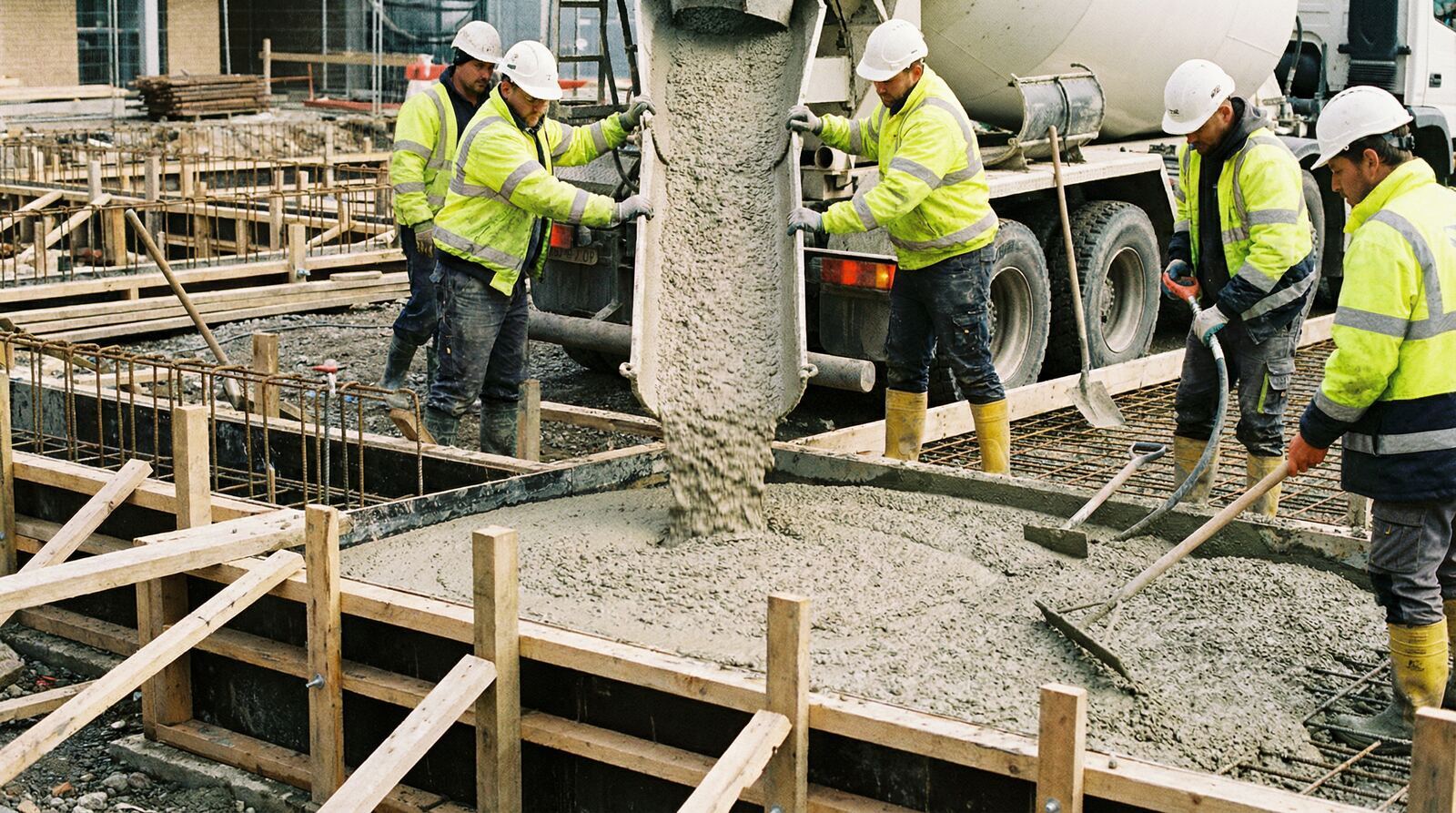
Comprehensive guide to concrete admixtures.
Why Does Concrete Need Admixtures?
Concrete, as the world's most consumed construction material, is a combination of cement, water, aggregates, and admixtures. Without proper admixtures, concrete has serious limitations: high water-to-cement ratio leading to reduced strength, uncontrollable setting time in various weather conditions, and vulnerability to freezing and corrosion. Kimia Ceram Zarin's concrete admixtures address these limitations. Superplasticizers enable up to 30 percent water reduction without workability loss. Accelerators and retarders adjust setting time according to project needs. And antifreeze admixtures enable concreting at sub-zero temperatures.
Types of Admixtures and Use Cases
Kimia Ceram Zarin offers concrete admixtures in several main categories. New-generation polycarboxylate ether (PCE) superplasticizers that provide the highest water reduction and workability retention, ideal for self-compacting concrete (SCC) and high-strength concrete. Naphthalene sulfonate (SNF) plasticizers as a more economical option for standard concrete. Accelerators based on calcium chloride and chloride-free formulations for cold weather concreting and precast elements. Retarders for hot weather concreting and long-distance ready-mix transport. And antifreeze admixtures for protecting fresh concrete against freezing. Selection of the appropriate type and dosage is performed by the technical team based on mix design, environmental conditions, and project requirements.
Frequently Asked Questions
Does superplasticizer replace water in concrete?
Superplasticizer does not replace water but enables reduction of the required water amount. By reducing water while maintaining workability, the water-to-cement ratio decreases and concrete strength increases.