Ceramic Deflocculant: Lower Slurry Viscosity and Water Use
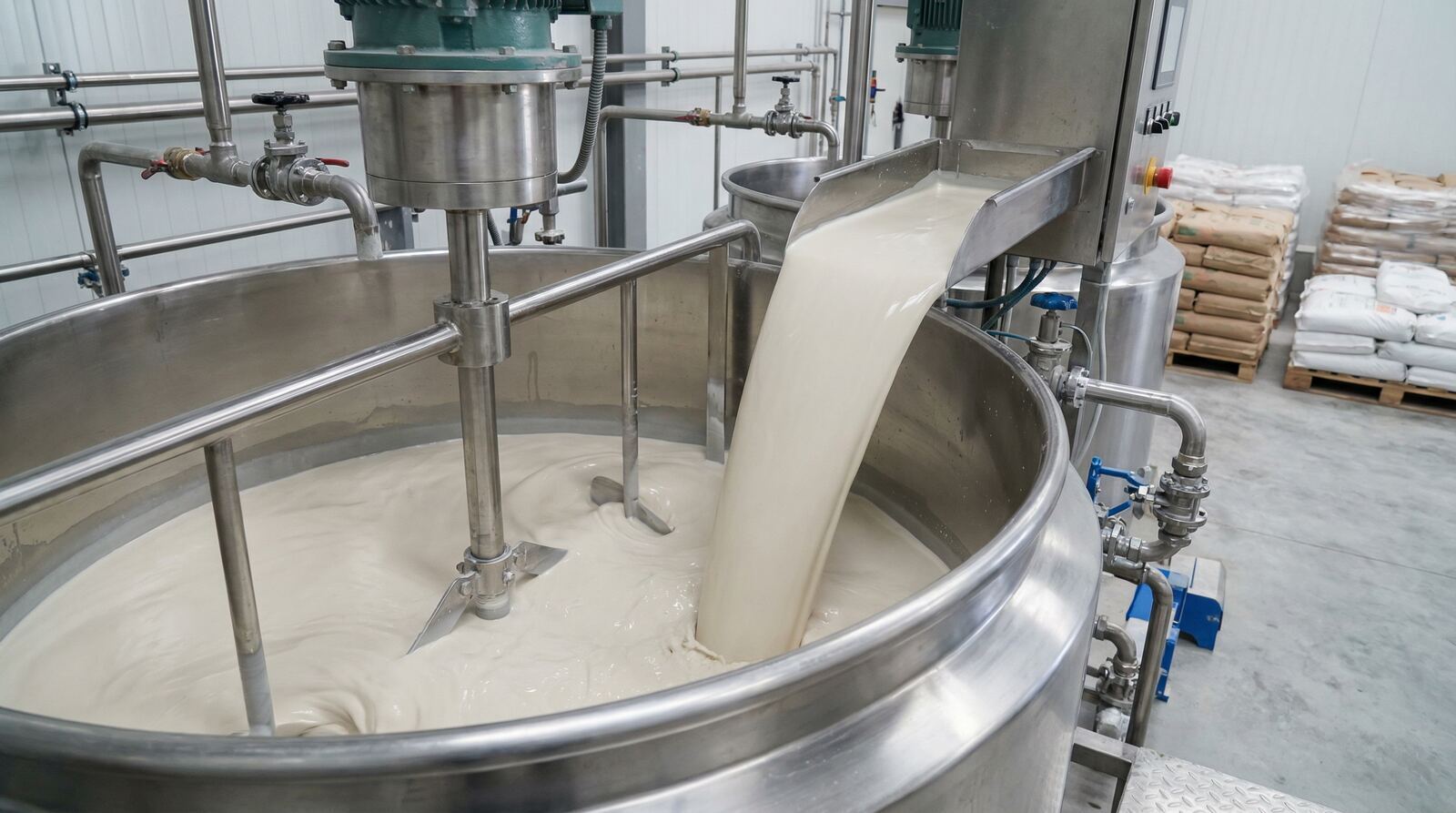
Comprehensive guide to ceramic deflocculants.
What is a Ceramic Deflocculant?
A deflocculant (also called dispersant) is a chemical substance used to reduce ceramic slurry viscosity and improve its rheological properties. In tile and ceramic production, mineral raw materials are mixed with water to form slurry. Without a deflocculant, mineral particles tend to aggregate and flocculate, leading to increased viscosity and process problems. Deflocculants create a uniform electrical charge on particle surfaces, generating repulsive forces that help prevent aggregation. Kimia Ceram Zarin offers deflocculants in three main types: sodium tripolyphosphate (STPP), sodium hexametaphosphate (SHMP), and polymeric dispersants.
Technical and Economic Benefits
The most important benefit of a good deflocculant is viscosity stability over a holding period. Without a suitable deflocculant, slurry gradually thickens between preparation and spray drying; its behaviour changes, operators compensate by adding water, and slurry density falls as a result. A well-dispersed slurry instead holds its viscosity and its density and does not settle. Kimia Ceram Zarin's deflocculants deliver this stability at a lower total deflocculant requirement than conventional systems. Alongside this stability, trials on ceramic slurry have also shown slip water reduction of up to 5%, which saves spray-dryer energy. These results are typical, and the right type and dosage depend on raw material type, slurry pH and line conditions; the Kimia Ceram Zarin technical team optimizes them for each line.
Frequently Asked Questions
What is the difference between STPP and SHMP?
STPP (sodium tripolyphosphate) is generally more suitable for body slurry and SHMP (sodium hexametaphosphate) for glaze slurry. The exact choice depends on raw material type and process conditions.