Industrial Adhesive & Stabilizer (Kimifix) — a CMC alternative for ceramics and industry
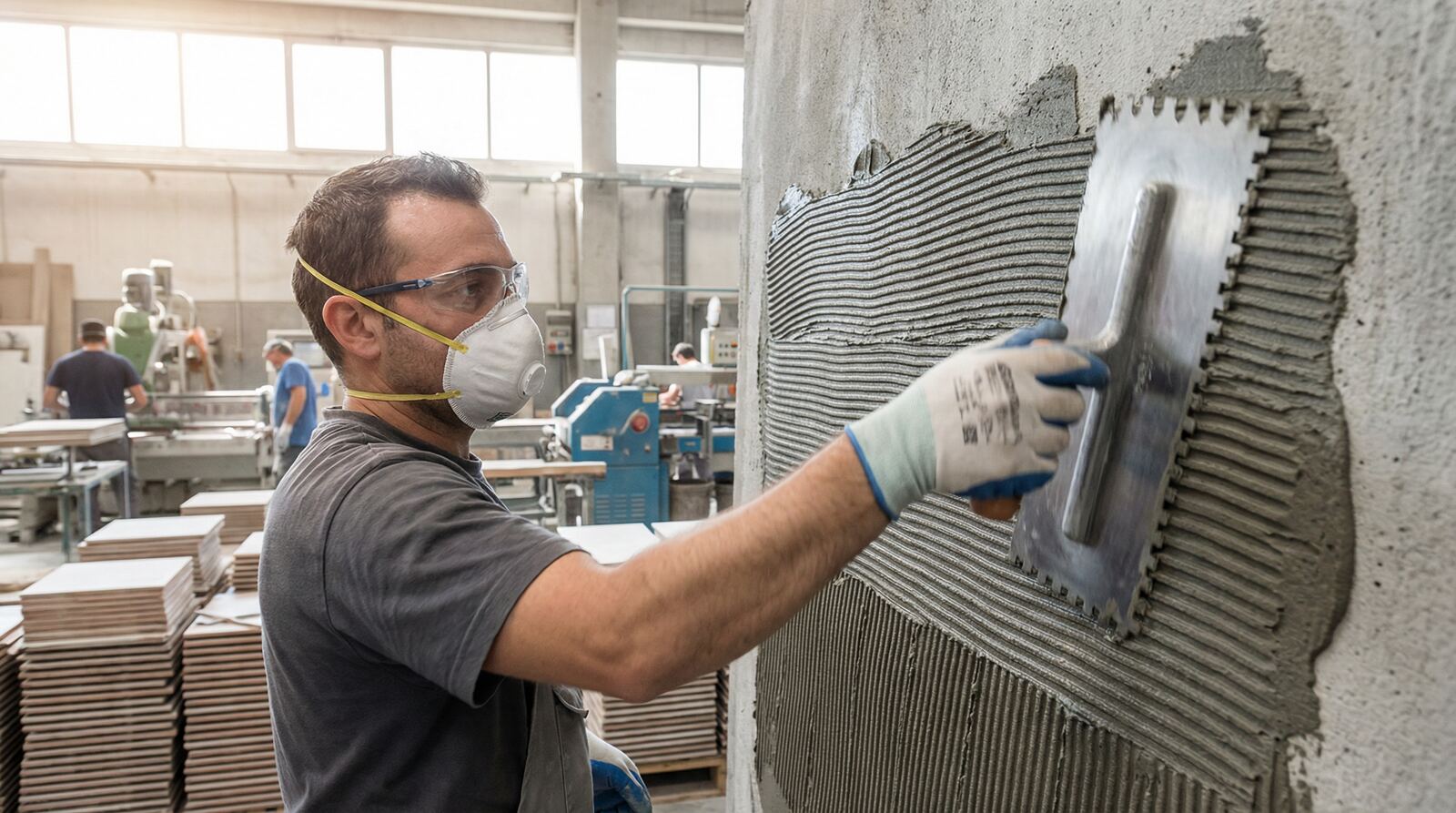
Comprehensive guide to Kimifix, an industrial adhesive and stabilizer and a formulated CMC alternative for ceramics.
Where CMC is used — an overview
Sodium carboxymethyl cellulose (CMC) is one of the most widely used water-soluble polymers, produced from natural cellulose. Due to its unique properties — thickening, stabilization, adhesion, and film formation — it is used across a wide range of industries: in food as a thickener in sauces, desserts, ice cream, and beverages; in detergents as an anti-redeposition agent; in paper as a surface sizing agent and printability enhancer; in textiles as warp yarn sizing and print-paste thickener; and in oil and gas drilling as a filtrate control agent and drilling-mud thickener. Each use calls for a grade and standard specific to that industry.
Kimifix: A Formulated CMC Alternative for Ceramics
Kimifix is Kimia Ceram Zarin's product for the tile and ceramic industry and is a formulated CMC alternative — not CMC itself. It is designed for glaze-to-body adhesion, glaze layer stabilization, and improving engobe layer integrity, and it helps prevent glaze dusting and cracking. The right fit for your production line is reviewed with Kimia Ceram Zarin's technical team.
Frequently Asked Questions
What is Kimifix made for?
Kimifix is made for glaze-to-body adhesion, glaze layer stabilization, improving engobe layer integrity, and helping prevent glaze dusting and cracking in the tile and ceramic industry.