Concrete Antifreeze (Kimifrost) — Safe Concreting in Cold Weather
Comprehensive guide to concrete antifreeze.
Dangers of Fresh Concrete Freezing
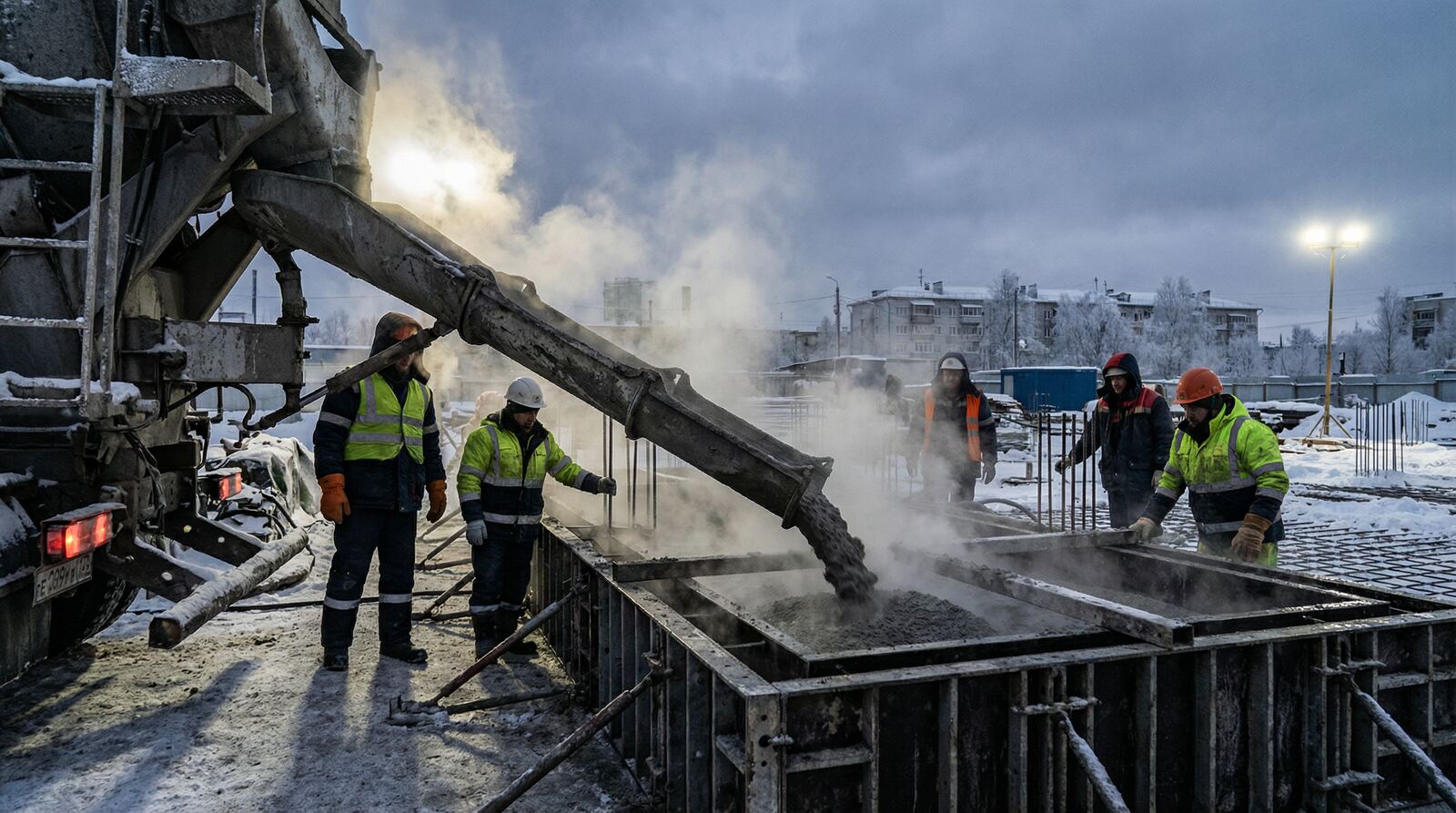
When fresh concrete is exposed to sub-zero temperatures, the water in the mix freezes. Water freezing creates two fundamental problems: first, the approximately 9 percent volumetric expansion of water when converting to ice, which exerts significant internal pressure on the concrete structure causing cracking. Second, the cessation of cement hydration reaction, which is essential for strength development. Concrete that freezes in the first hours may lose up to 50 percent of its ultimate strength. Kimifrost is Kimia Ceram Zarin's concrete antifreeze admixture that lowers the freezing point of mix water and enables continuation of the hydration reaction at sub-zero temperatures. This product is formulated based on nitrite and nitrate compounds and, in addition to antifreeze properties, also has accelerating effects.
Usage Guide and Dosage
Kimifrost dosage is set from ambient temperature as a starting point and is optimized for line conditions. At 0 to minus 5 degrees, a dosage of 2 to 3 percent of cement weight; at minus 5 to minus 10 degrees, 3 to 5 percent; and at minus 10 to minus 15 degrees, 5 to 7 percent is suggested as a starting point. The Kimia Ceram Zarin technical team determines the exact dose for each condition. Important usage notes: Kimifrost should be added to mixing water, not directly to concrete. Fresh concrete temperature at the time of placement should not be less than 5 degrees. Thermal blankets for concrete after placement are still recommended at very low temperatures. And Kimifrost should not be used simultaneously with air-entraining superplasticizers unless confirmed by the laboratory.
Frequently Asked Questions
Does concrete antifreeze replace thermal curing?
Concrete antifreeze supplements thermal curing, it does not replace it. At very low temperatures, simultaneous use of antifreeze and thermal blankets gives better results.