Glaze Deflocculants (Kimiglaze) — Optimizing Ceramic Glaze Slurry
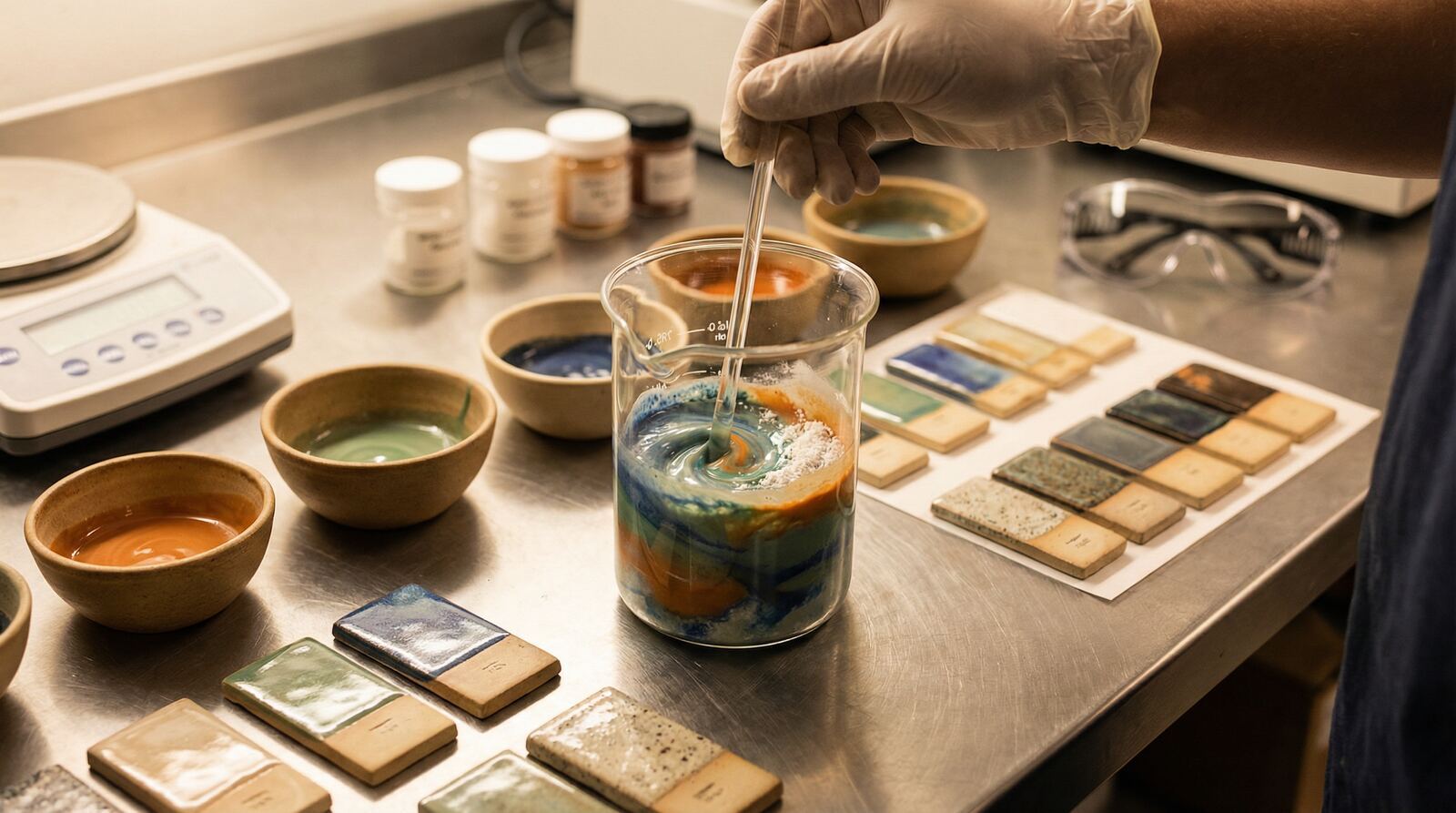
Comprehensive guide to ceramic glaze deflocculants.
Glaze Slurry Challenges and the Role of Deflocculants
Ceramic glaze slurry is a complex system of fine minerals, frits, pigments, and additives in water. Controlling the viscosity and stability of this slurry is essential for achieving uniform, high-quality glazing. Without a proper deflocculant, glaze particles tend to aggregate, making the slurry unstable and inhomogeneous. This problem leads to non-uniform glaze thickness, surface defects such as pinholing and cratering, and issues with glaze application systems (curtain, spray, dipping). Kimiglaze is a range of specialized glaze deflocculants developed by Kimia Ceram Zarin to address the specific needs of glaze slurry. Unlike body deflocculants, glaze deflocculants must be compatible with frits and pigments and have no effect on the final glaze color and appearance.
Grades and Selection Guide
Kimiglaze is available in several main grades. One grade for high-frit glazes that have lower pH sensitivity. A second grade for glazes with high natural raw material content that require long-term stability. And a third grade that offers a good balance between performance and cost. Factors influencing selection include glaze chemical composition, frit-to-raw material ratio, slurry pH, glaze application method, and slurry storage duration. Kimia Ceram Zarin's laboratory recommends the right grade and dosage through analysis of the customer's glaze sample.
Frequently Asked Questions
Is Kimiglaze different from body deflocculant?
Yes. Glaze deflocculants are formulated considering the presence of frits and pigments and should not affect glaze color. Using body deflocculant in glaze may cause issues such as color change or instability.