Tile Lubricants & Pressing Aids — Optimizing the Ceramic Pressing Process
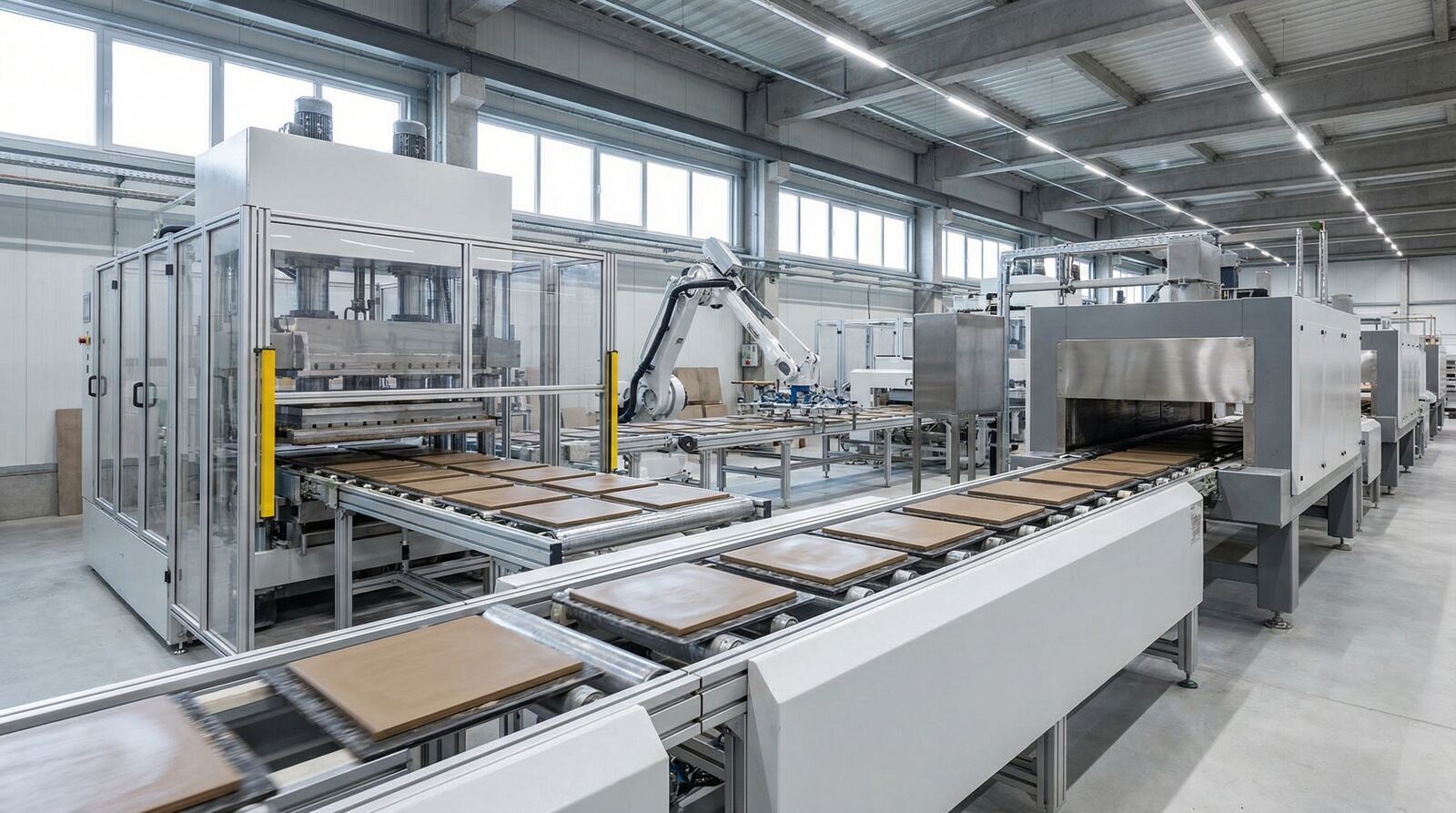
Complete guide to ceramic tile lubricants and pressing aids.
The Role of Pressing Aids in Ceramic Tile Production
In tile and ceramic production lines, the pressing stage is one of the most sensitive parts of the process. Granules from the spray dryer must be compressed under high pressure in molds to form a green body with the desired density and strength. Without a suitable pressing aid, friction between granules and between granules and mold walls causes numerous defects: body delamination, edge cracks, premature mold wear, and density non-uniformity across the tile surface. Kimiplast is a range of specialized lubricants and pressing aids developed by Kimia Ceram Zarin to address these challenges. By reducing both internal and external friction, these products enable more uniform pressing at lower pressures.
Technical and Economic Benefits of Kimiplast
Using Kimiplast pressing aids brings significant advantages to the production line. First, reduced friction between granules lowers the required pressing pressure, resulting in lower energy consumption and less equipment wear. Second, density uniformity across the entire body surface improves, minimizing defects from density differences such as post-firing warping. Third, in trials, press mold service life increased by up to 40%, creating substantial savings in maintenance costs. Fourth, green body surface quality improves, providing better preparation for glazing. These products are available in various grades for floor tiles, wall tiles, porcelain, and granite tiles.
Selection and Usage Guide
Selecting the right pressing aid grade depends on several factors: body type (single-fire, double-fire, porcelain), body formulation, granule moisture, pressing pressure, and production line speed. As a general rule, porcelain bodies require grades with higher lubrication due to their higher pressing pressures. Dosage is typically taken as a starting point of 0.3 to 1.5 percent of dry body weight and varies with the body and line conditions. Kimia Ceram Zarin's technical team determines the optimal grade and dosage for each factory through production line visits and comparative testing. Free laboratory samples are also provided for initial evaluation.
Frequently Asked Questions
Does the pressing aid affect body color?
Kimiplast pressing aids are formulated to completely burn out at firing temperatures, leaving no effect on the final body color. However, selecting the appropriate grade based on firing temperature is important.
What is the difference between a pressing aid and a lubricant?
A lubricant primarily reduces external friction (between granules and mold), while a pressing aid reduces both external and internal friction (between granules) and also improves the mechanical properties of the green body.