Glass Printing Medium — Ink and Vehicle for Decorative Glass Printing
Comprehensive guide to glass printing mediums.
The Art and Technology of Glass Printing
Glass printing is a process in which designs and colors are applied to the glass surface using mineral pigments and glass frits, then fired in a kiln. The result is durable decorations resistant to abrasion, chemicals, and UV radiation. The printing medium serves as the vehicle between pigments and the glass surface. A suitable medium must have appropriate viscosity for the intended printing method, keep pigments uniformly suspended, create good initial adhesion to the glass surface, and burn out completely during firing without residue. Kimia Ceram Zarin offers glass printing mediums in both solvent-based and water-based types.
Applications and Printing Methods
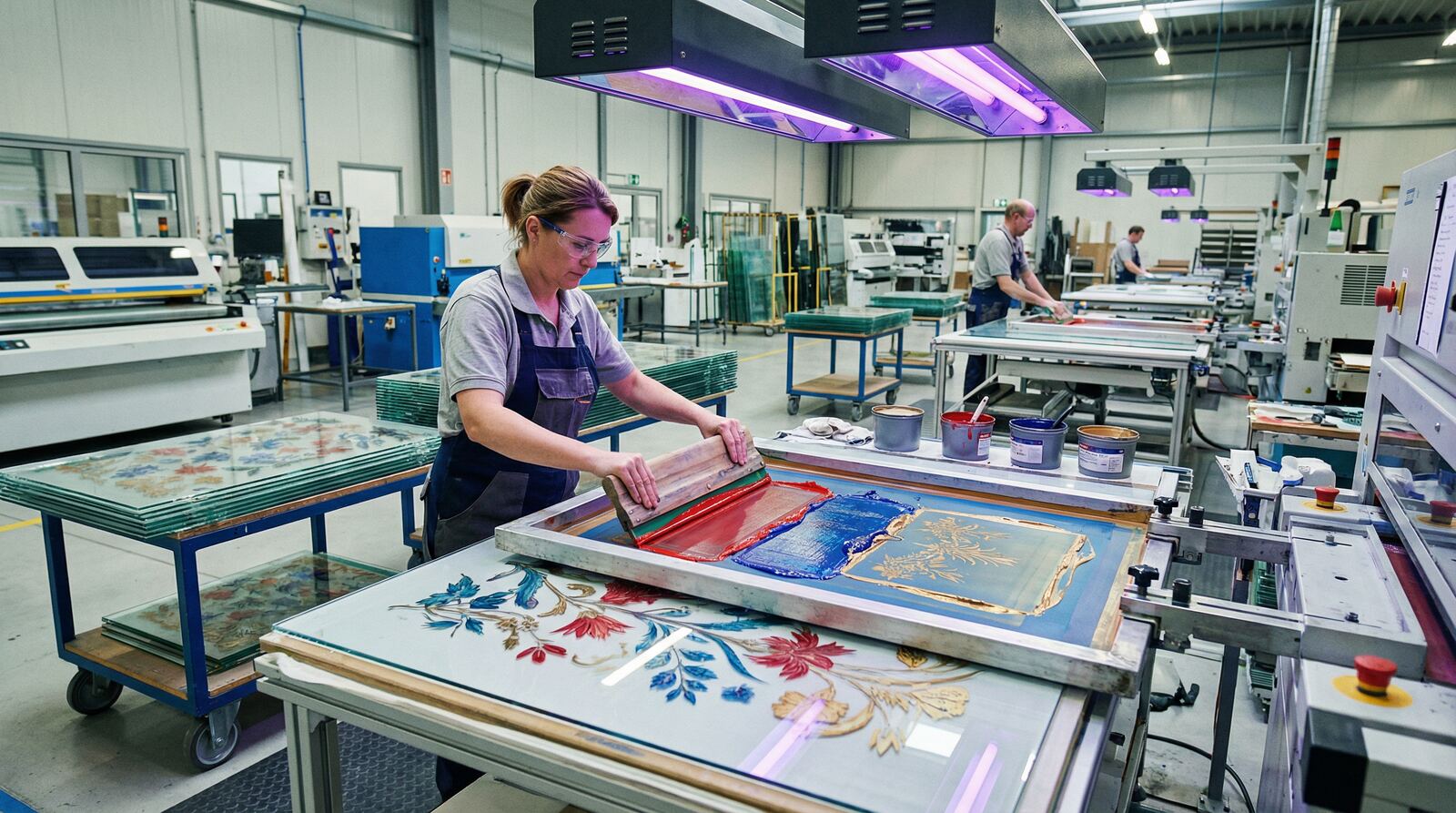
Kimia Ceram Zarin's glass printing mediums are optimized for various printing methods. Screen printing medium is the most widely used type and is used for producing decorative architectural glass, appliance glass (oven, microwave), automotive glass, and glassware. Pad printing medium is suitable for printing on curved surfaces such as bottles and cups. And digital mediums are used for custom prints with low runs and complex designs. Each medium is formulated with viscosity, drying speed, and burnout temperature appropriate for the printing method and glass type. Kimia Ceram Zarin's technical team recommends the right medium based on the customer's production line and final product.
Frequently Asked Questions
Is water-based medium a suitable replacement for solvent-based?
Water-based mediums have many advantages in terms of environmental impact and worker safety. However, some applications still require solvent-based medium. Selection depends on the printing method and quality requirements.