Mould Soap — Streamlining the Molding Process
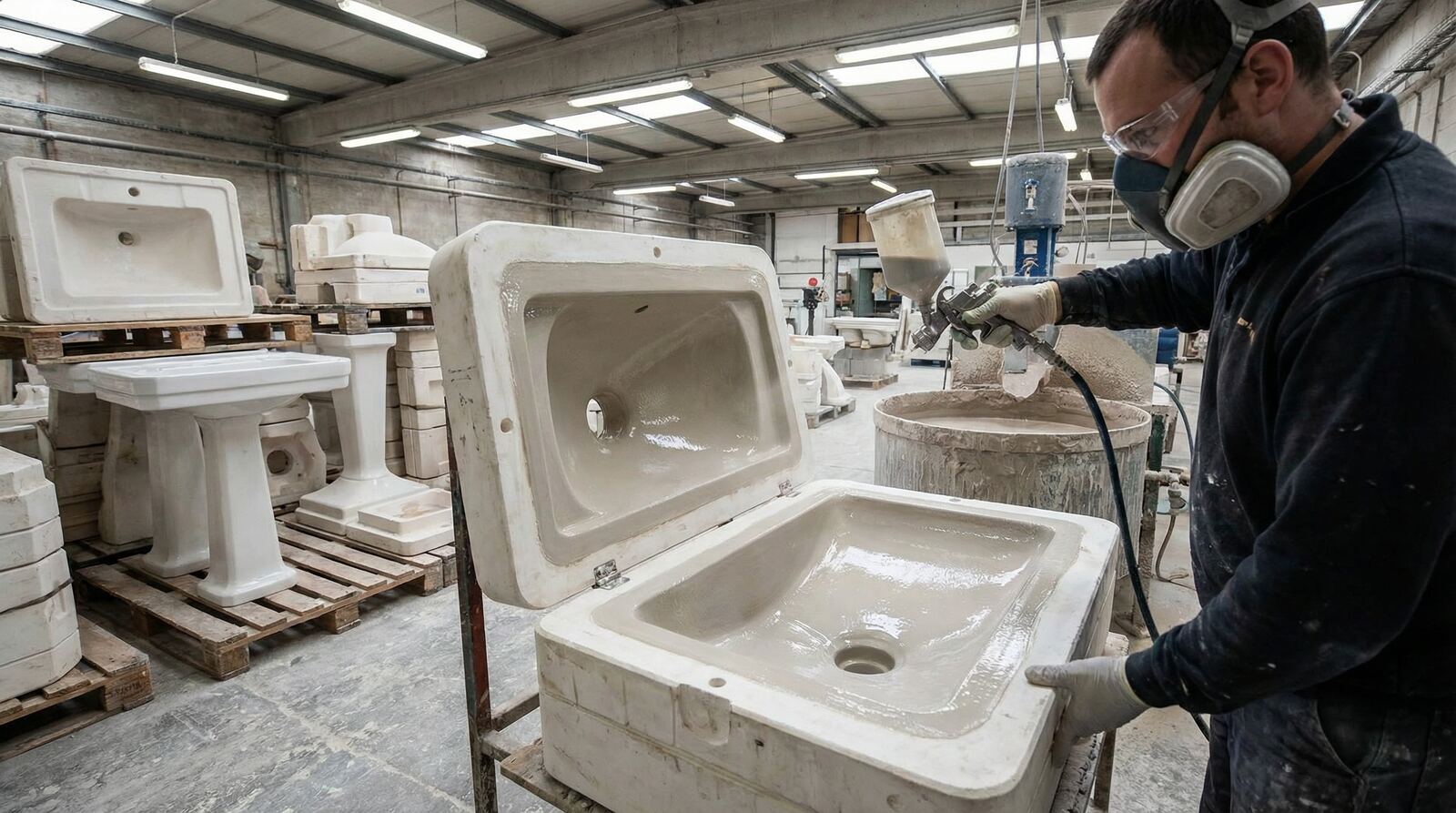
Comprehensive guide to mold release agents for ceramic and sanitaryware industry.
The Importance of Mold Release in Ceramic Production
In the production of sanitaryware and shaped ceramics, ceramic slurry is poured into plaster or resin molds. After body formation, the piece must separate easily and without damage from the mold. Without a proper release agent, the body sticks to the mold surface and cracks or deforms during separation. This problem, in addition to production waste, also reduces mold life. Kimia Ceram Zarin's mold release agent creates a thin, uniform layer between the mold surface and the ceramic body. This layer enables easy and clean piece separation and helps prevent slurry from sticking to the mold.
Product Types and Applications
Kimia Ceram Zarin's mold release agent is available in several different formulations. Water-based type for traditional plaster molds, which is most commonly used in sanitaryware production. Solvent-based type for resin molds and pressure casting processes. And paste type for application on large molds and vertical surfaces. Key benefits include significant reduction in waste from cracking during molding, an increase in mold life reported at up to 30 percent in trials, improved green piece surface quality, and reduced molding cycle time. Dosage is very low, and a single application is sufficient for multiple molding cycles. Kimia Ceram Zarin's technical team recommends the right type and application method through visiting the customer's production line.
Frequently Asked Questions
Does the mold release agent affect the final properties of the ceramic product?
No. The mold release agent burns out completely during firing and leaves no residue in the final product. Therefore, it has no effect on the physical, chemical, or aesthetic properties of the fired product.