Sugar Effect Medium — Creating Special Textures on Tiles
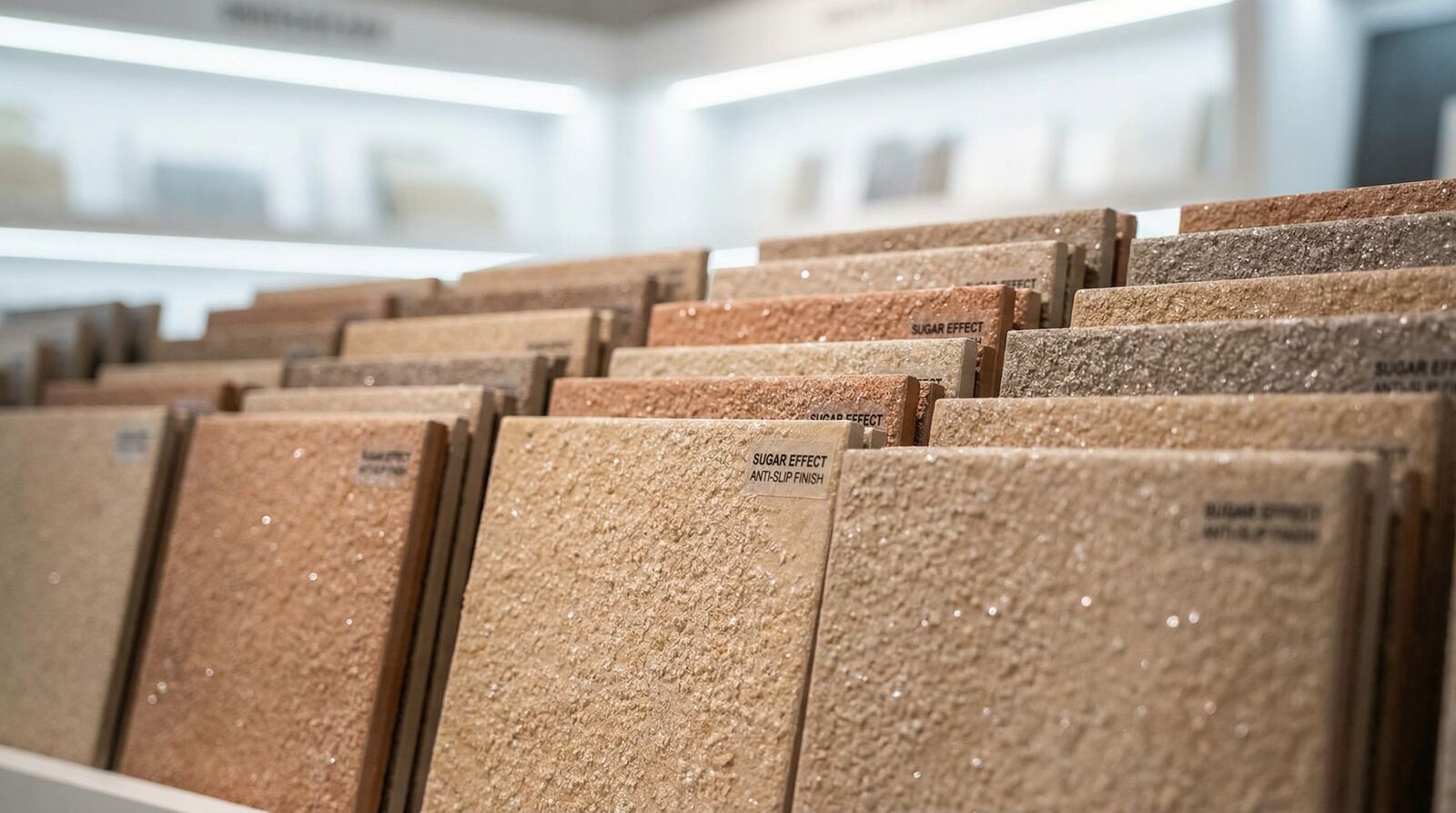
Comprehensive guide to sugar effect medium for decorative textures on ceramic tiles.
What is Sugar Effect Medium and How Does It Work?
Sugar effect medium is a decorative additive used to create raised and tactile textures on ceramic tile surfaces. The name "sugar" comes from the resemblance of the final texture to sugar granules. This product contains special particles that, after application on the glaze surface and kiln firing, melt and create fine, regular cavities. The result is a surface with a natural and attractive texture that is distinctive both visually and to the touch. Kimia Ceram Zarin produces sugar effect media in various particle sizes and texture intensities, allowing designers to create diverse effects from fine to coarse textures.
Application Methods and Technical Tips
Sugar effect medium is typically applied to the tile surface after glazing and before kiln entry. Application methods include controlled-pressure spraying, rotating disc application, and curtain coating. Precise adjustment of viscosity, spray pressure, and nozzle distance from the tile surface is essential for achieving uniform texture. An important consideration is that the firing temperature must match the melting point of the medium particles. If the temperature is too low, particles will not fully melt and the texture will be incomplete. If too high, the cavities will close and the sugar effect will be lost. Kimia Ceram Zarin's technical team determines optimal parameters based on each factory's kiln and glaze specifications.
Frequently Asked Questions
Is the sugar texture resistant to abrasion?
Yes. After firing, the sugar texture becomes part of the glaze structure and has abrasion resistance similar to the glaze itself. For high-traffic applications, grades with higher hardness are recommended.