Porcelain & Tableware Body Binder: Cut Pre-Firing Breakage
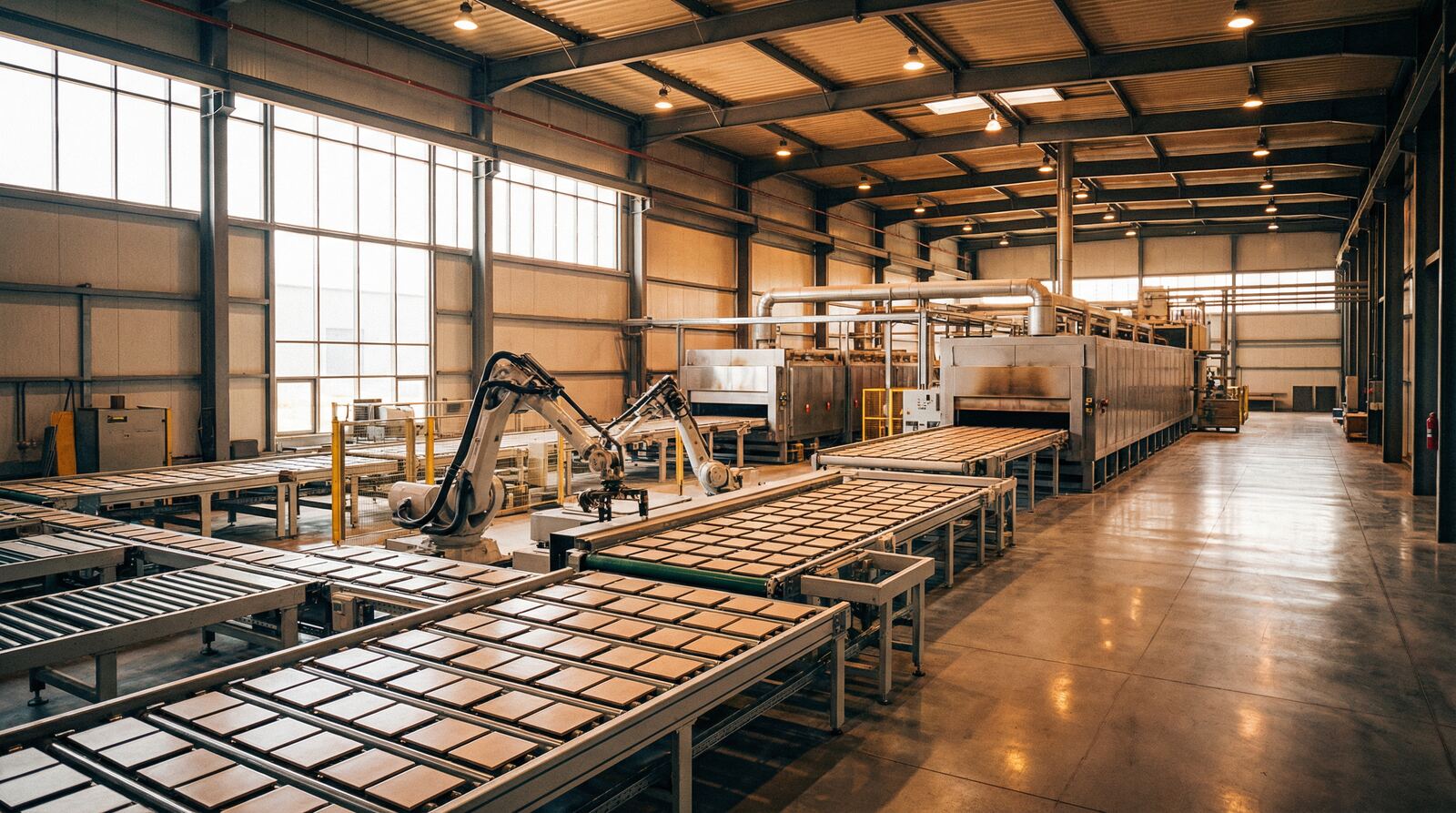
A technical guide to binders for tableware and porcelain bodies.
Why a Porcelain Body Is Harder Than a Tile
Tableware and sanitaryware bodies have several characteristics that make green strength harder than it is for tile. Thin sections and complex geometries, handles, rims and corners, create stress concentrations. Manual handling is more common than with tile in many workshops, and every pick and place is an opportunity to break something. Most importantly, these bodies are white firing, so the slightest discolouration from organic residue is immediately visible in the finished piece. A binder therefore has to satisfy two requirements that usually pull against each other: high strength in the green state and completely clean burnout during firing.
Where the Breakage Actually Happens
Before choosing any additive, it is worth recording where the breakage actually occurs. In slip casting, most damage typically happens during demoulding and fettling, while the body still holds moisture and offers little resistance. In pressed bodies, the critical stage is often ejection and initial stacking. In both cases glazing produces a second population of losses, because the dried piece must be handled again and then wetted. Separating these three groups from one another is the difference between solving a problem and swapping materials at random.
What a Suitable Binder Must Deliver Here
For a porcelain body, a few properties matter more than the rest. Green strength must be uniform even in thin sections, which means good distribution of the binder throughout the slip rather than simply a high level of it. Burnout must be complete and residue free, and must occur within the temperature range of that factory cycle rather than an ideal laboratory one. The effect on slip rheology must be predictable, because in slip casting an unintended change in viscosity or casting rate translates directly into wall thickness and cycle time. And compatibility with the other additives present in the system, deflocculants in particular, should be established before full scale production.
How to Design a Controlled Trial
The most useful trial is the simplest one. Run a reference batch with no change and a test batch in which exactly one variable differs, on the same day, with the same operator and the same moulds. Hold moisture, ambient temperature and the dryer curve constant. Record scrap counts by stage rather than as a single figure at the end of the day. Where possible, follow a few pieces from each batch through firing so that effects on colour and porosity are visible too. The result of such a trial is dependable even when it is negative, whereas a change made without a reference group is very difficult to interpret.
Status of This Product at Kimia Ceram Zarin
Kimia Ceram Zarin is developing a dedicated binder for tableware and sanitaryware bodies. The product is at the development and industrial evaluation stage and its performance data has not yet been published as a technical datasheet. Until that data is complete and documented, no performance figures are stated for it. Factories interested in taking part in industrial evaluation, or facing pre firing breakage in thin bodies, are welcome to contact us for a technical discussion.
Frequently Asked Questions
Is a tile binder suitable for a porcelain body?
Not necessarily. The requirements differ, particularly the colour sensitivity of a white firing body and behaviour in thin sections. A binder should be evaluated against the firing cycle and forming method of that specific factory.
How does a binder affect slip casting?
Beyond green strength, a binder can affect slip viscosity and casting rate. That effect should be measured before full production, since it translates directly into wall thickness and cycle time.
Is this product available to order now?
The product is at the development and industrial evaluation stage and does not yet have a published datasheet. Contact us to discuss evaluation in your own line.