What Is a Binder? Tile and Ceramic Body Binder Guide
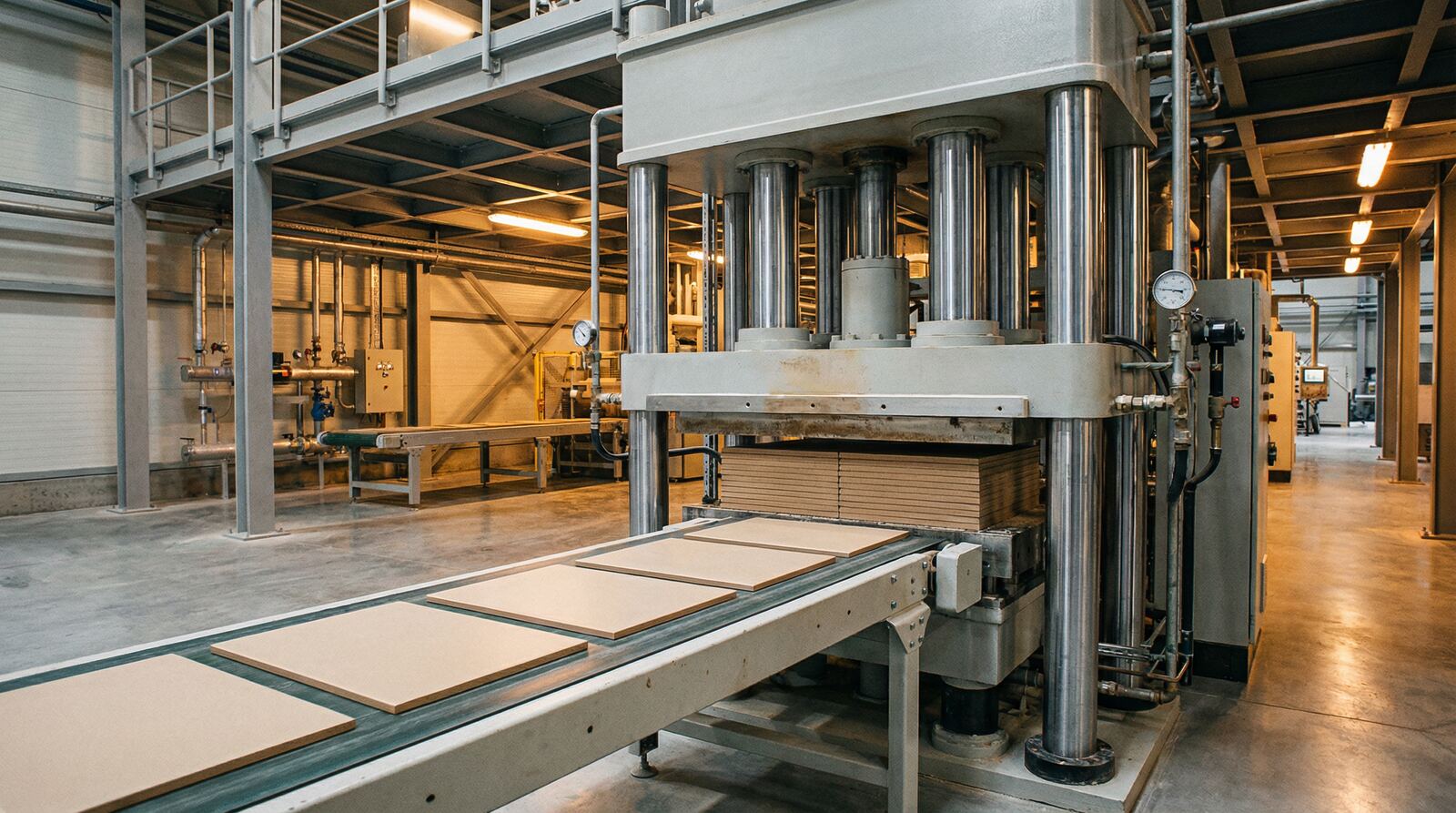
What is a binder and why does it matter for tile and ceramic bodies?
What Is a Binder?
A binder is an additive that holds the mineral particles of a ceramic body together before firing. A dried ceramic body is really a packed mass of solid particles with no permanent chemical bond between them; that bond forms only in the kiln, through sintering. Until that moment, the only things holding the piece together are weak interparticle forces and whatever binder has been added. This is why a binder should be understood as a temporary additive: its job is to carry the piece intact from forming to firing, and then to leave the body without residue.
Green Strength, and Why the Real Cost Sits There
Green strength is the mechanical strength of a body before firing. It matters because most of the scrap in a ceramic line is generated in exactly that window: between pressing or casting and entry into the kiln. A piece that chips, cracks or breaks in that interval has consumed the full cost of raw material, milling, drying and labour, and produced nothing. Unlike firing defects, which usually announce themselves at final inspection, weak green strength tends to show up as a diffuse, persistent scrap rate that is not easily traced to a single cause.
Types of Binder and How They Differ
Binders fall into a few broad families. Natural mineral binders such as plastic clays are part of the body formulation itself and provide green strength through plasticity, but their proportion cannot be varied freely because they also affect firing behaviour and final colour. Natural and modified organic binders, such as cellulose and starch derivatives, are water soluble and influence slurry rheology as well as adhesion. Synthetic polymeric binders form a third group, engineered for this specific duty, and their advantage is controllability: green strength can be adjusted without altering the mineral formulation of the body. No family is inherently superior. The right choice depends on the forming method, the firing cycle and the constraints of the line.
How a Binder Actually Works
Most organic binders work through molecular bridging. Long molecular chains adsorb onto the surfaces of mineral particles and bridge between neighbouring ones. As water leaves during drying, these chains contract and form a continuous network that distributes mechanical load across the piece. Two practical consequences follow. First, uniform distribution matters as much as quantity: a binder that has not had time to disperse produces strong and weak regions within the same piece. Second, the binder must burn out completely below the temperature at which sintering begins, or carbon residue can cause discolouration or porosity.
Choosing a Binder for a Specific Line
Selecting a binder is a formulation decision, not the purchase of a commodity. The questions worth answering before any trial are: what is the forming method, and at which stage does the body actually break? Where in the process is the binder added, and how much mixing time does it get? How fast is the firing cycle, and is there enough time for complete burnout? Is the body white firing and therefore colour sensitive? And are other additives such as plasticisers or deflocculants present in the same slurry, where they might interact with the binder? The answers usually narrow the field considerably before a single laboratory trial is run.
Common Mistakes
Three mistakes recur more than any others. The first is raising the binder level in response to every strength problem, when an excess can cause drying difficulties, sticking to tooling, and carbon residue. The second is adding the binder at a point in the process that leaves no time for uniform distribution, which produces scattered results between pieces from the same batch. The third is comparing two binders without holding the other variables constant: changing moisture, pressing pressure or the dryer curve at the same time invalidates any comparison. One controlled trial on a single batch usually yields more information than several months of uncontrolled use.
Next Step
If pre kiln scrap in your line is higher than expected, the right starting point is identifying exactly where the breakage occurs, not immediately selecting an additive. The technical team at Kimia Ceram Zarin can work through that analysis with you, help design a controlled trial, and provide a laboratory sample for evaluation.
Frequently Asked Questions
What exactly does a binder do in ceramics?
A binder holds the mineral particles of the body together before firing so the piece can survive forming, handling and drying without breaking. The permanent bond forms only in the kiln.
What is the difference between a binder and a plasticiser or deflocculant?
A binder targets the strength of the dry body, while plasticisers and deflocculants control the behaviour of the slurry in its liquid state. These are different objectives, and in a single system they can sometimes interfere with each other.
Does a binder affect the properties of the fired product?
A suitable organic binder should burn out completely before sintering begins. If the firing cycle does not allow complete burnout, carbon residue can affect colour or porosity, which is why matching the binder to the firing cycle matters.
How do I know whether my problem is binder related?
If breakages occur mainly between forming and kiln entry rather than after firing, the issue is most likely green strength. Recording exactly where and at which stage scrap occurs is the first and most useful step.